
Why Your Resume May Not Reach a Recruiter
You can have the right skills, relevant experience and a strong career history, yet your application may still struggle to get noticed.
One reason is the technology used to manage large volumes of applications.
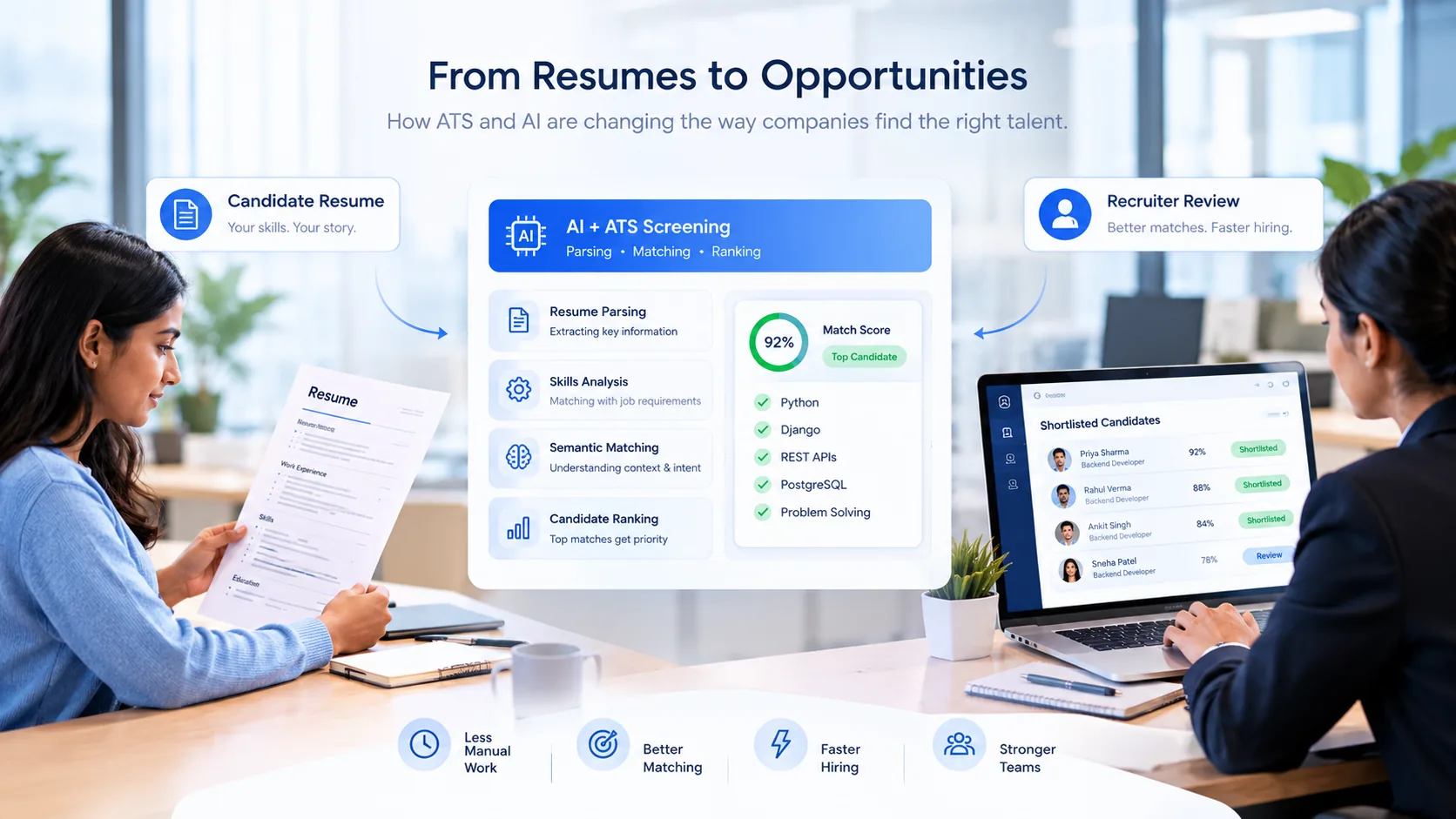
Many employers use Applicant Tracking Systems, commonly called ATS platforms, to collect and organize applications. Depending on the system, the software may parse information from resumes, store candidate data, support searches and apply screening rules.
This means your resume is often processed by software before a recruiter spends time reviewing it.
The important question is therefore not simply whether your resume looks good to a human. It also needs to communicate your qualifications clearly to the systems used in the hiring workflow.
What Is an Applicant Tracking System?
Resume parsing is one of the first technical steps in many digital hiring workflows. The software attempts to convert the content of your resume into structured information.
- For example, it may identify:
- Name
- Contact information
- Job titles
- Companies
- Employment dates
- Education
- Skills
- Certifications
- Projects
If the document contains complicated layouts, images or information that cannot be extracted correctly, some details may not be represented accurately in the structured candidate record. This is why a simple, readable resume format can be important when applying online.
From Keyword Matching to Semantic Matching
Traditional recruitment software often relied heavily on keywords and structured rules.
For example, a recruiter searching for a Python developer might search for terms such as Python, Django, REST API and SQL. Modern AI-assisted systems can go further by analyzing relationships between terms and the context in which skills are described. This is sometimes called semantic matching. Instead of asking only: "Does the resume contain this exact word?" an AI-assisted system may also consider: "Does this candidate's experience appear relevant to what this role requires?" The exact capabilities depend on the recruitment platform being used.
Why Keyword Stuffing Is Not the Answer
A common mistake among job seekers is trying to fill a resume with as many keywords as possible.
For example, a candidate might repeatedly write: Python, Python Developer, Python Programming, Python Development, Python Software Developer. This does not necessarily demonstrate expertise. A better approach is to show how the skill was actually used. Instead of simply writing: "Python" a stronger description could be: "Developed REST APIs using Python and Django for a recruitment platform serving employer and candidate workflows." The second example provides context. The objective should be relevance and evidence, not repetition.
The Importance of a Machine-Readable Resume
Before an automated system can evaluate the meaning of your experience, it needs to successfully extract the information from your document. This makes resume structure important. Avoid hiding important information inside: Images Charts Decorative graphics Scanned pages Unusual text boxes Overly complex layouts A clean structure with recognizable headings such as Experience, Education, Skills and Projects makes the information easier to interpret. Your resume should work for two audiences: the software processing the application and the recruiter eventually reviewing it.