
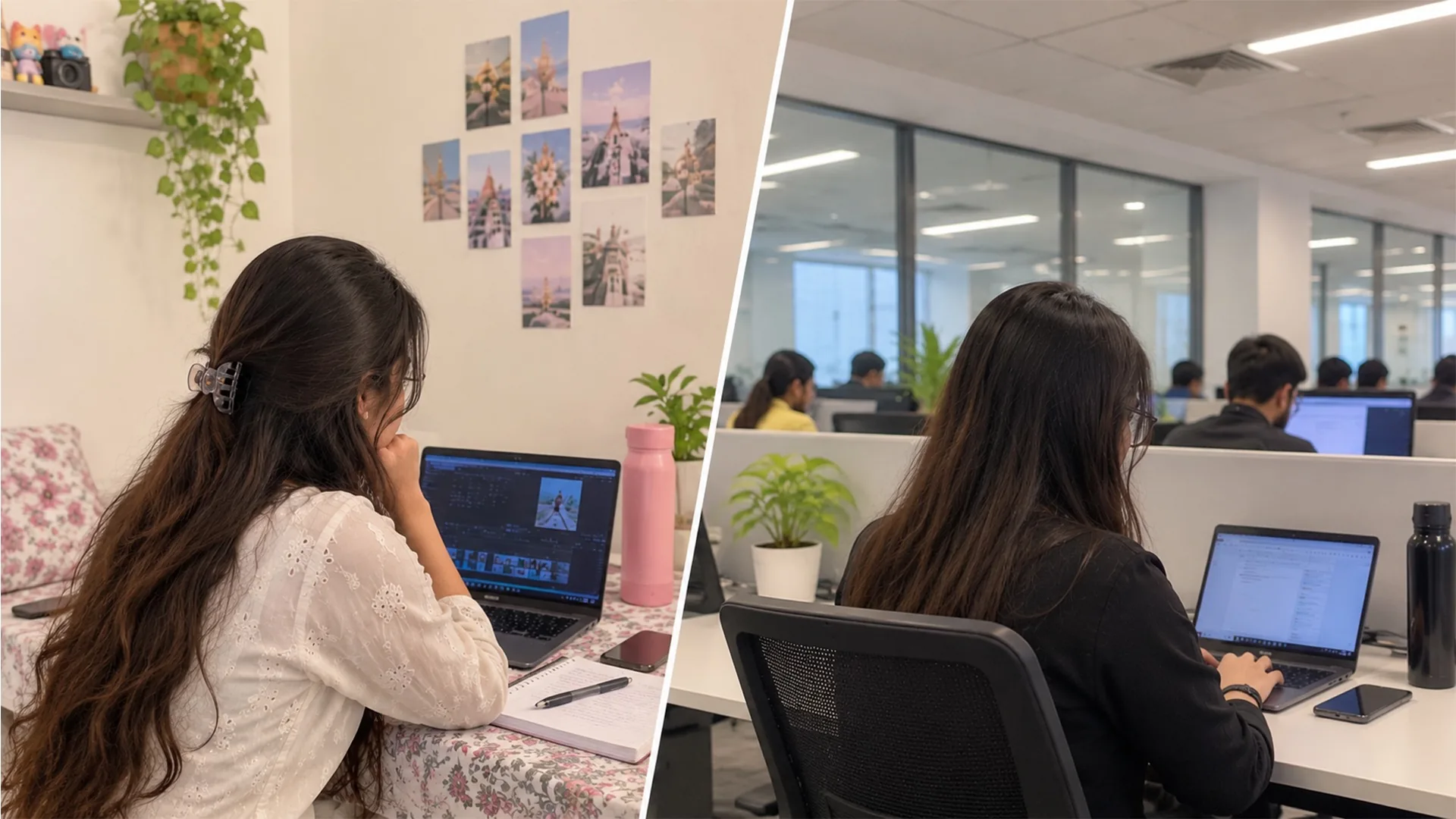
The way people work has changed a lot in recent years. Earlier, most employees had to visit the office five days a week. Today, companies are offering more flexible options, such as working from home, working from the office, or a mix of both.
Many companies are now choosing hybrid work, where employees spend a few days in the office and the remaining days working from home. At the same time, some companies continue to offer fully remote jobs.
But which work model is better for companies and employees? Let's understand the difference and why businesses are choosing one over the other.
1. What Is Hybrid Work and Remote Work?
Before comparing both options, it is important to understand what they mean.
Hybrid Work Model
In a hybrid work model, employees divide their working time between the office and home. For example, an employee may work from the office on Monday, Tuesday, and Wednesday, then work from home on Thursday and Friday.
Some companies allow employees to choose their office days, while others follow a fixed schedule.
Remote Work Model
In a remote work model, employees work from home or another location instead of visiting the company office regularly. Most communication, meetings, and daily tasks happen online through video calls, emails, and project management tools.
This model gives employees more freedom because they do not need to travel to the office every day.
2. Why Are Companies Choosing Hybrid Work?
Many companies prefer hybrid work because it offers a balance between office teamwork and working from home.
Here are some common reasons:
Better Team Communication: Employees can meet face-to-face, share ideas, discuss problems, and work together on important projects.
Stronger Team Relationships: Spending some time together in the office helps employees build better relationships with their colleagues.
Flexible Working: Employees get time to work from home, which can reduce daily travel and help them manage personal responsibilities.
Better Employee Engagement: A flexible schedule can make employees feel more comfortable and satisfied with their jobs.
However, hybrid work also has some challenges. Companies still need to maintain office spaces and manage schedules so that team members can meet on the same days.
3. Why Are Some Companies Choosing Fully Remote Work?
Not every company needs employees to work from an office. Many businesses are choosing remote work because it offers several benefits.
Access to More Talent: Companies can hire skilled people from different cities and even different countries without asking them to relocate.
Lower Office Expenses: Businesses can save money on office rent, electricity, furniture, and other daily expenses.
No Daily Travel: Employees save time and money because they do not need to travel to the office every day.
More Work Flexibility: Remote employees can often manage their schedules more easily, depending on their company's working hours and policies.
But remote work also comes with challenges. Employees may sometimes feel lonely or disconnected from their teams. New employees may also find it difficult to understand company culture without regular face-to-face interaction.
4. Hybrid Work vs Remote Work: Which Is Better?
Both work models have their own benefits and challenges. The right choice depends on the company's needs, the type of job, and employee preferences.
What Are Companies Choosing?
Many companies are choosing hybrid work as a middle option. A common arrangement is asking employees to work from the office two or three days a week.
However, fully remote work is still important for companies that want to hire talent from different locations or have jobs that can be completed entirely online.
There is no single work model that suits every business. For example, software developers, designers, and content writers may be able to work remotely, while some roles require regular office visits and face-to-face teamwork.
5. Final Thoughts
The future of work is not limited to working from an office or staying at home. Companies are exploring different ways to make work more flexible while keeping employees connected and productive.
Hybrid work offers a balance between office meetings and personal flexibility, while remote work gives employees more freedom over where they work.
In the end, the best work model is the one that supports both business goals and employee needs.